
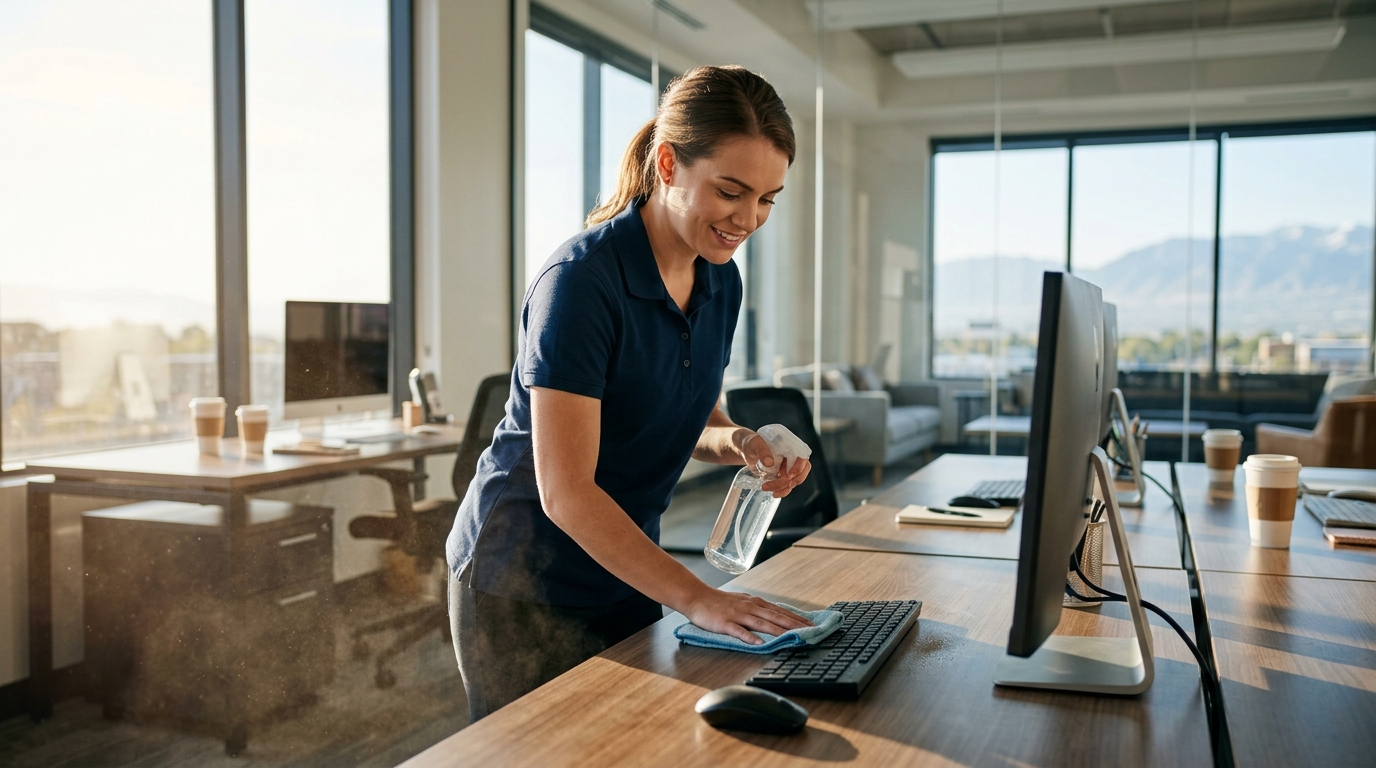
Recent industry data shows that commercial spaces experience a forty percent higher concentration of airborne pathogens compared to residential environments. According to the Environmental Protection Agency, maintaining strict commercial hygiene standards directly reduces employee sick days and boosts overall productivity. Office managers in Utah must implement rigorous cleaning schedules to combat local dust, pollen, and seasonal allergens. This guide outlines the exact protocols required to maintain a sterile, productive, and compliant workspace. You will learn how to structure service agreements, select appropriate equipment, and partner with local professionals who understand regional environmental challenges. (Bountiful Cleaning Service)
Understanding Commercial Hygiene Standards
Commercial sanitation is the systematic removal of biological contaminants from high-traffic workspaces. Facility managers must prioritize high-touch surfaces like door handles, elevator buttons, and breakroom appliances. These areas accumulate bacteria rapidly during standard business hours. Implementing a standardized cleaning checklist ensures consistent coverage across all departments. You should request detailed scope documents from your service provider before signing any contract. This transparency prevents coverage gaps and establishes clear accountability. Regular audits of cleaning logs further verify compliance with local health department guidelines.
Utah Climate and Indoor Air Quality
Indoor air quality refers to the air quality within and around buildings and structures, especially as it relates to the health and comfort of occupants. Utah experiences distinct seasonal shifts that directly impact office environments. Spring pollen and summer dust require specialized filtration and surface wiping routines. You must ensure your cleaning team utilizes HEPA-filter vacuums and electrostatic sprayers. These tools capture microscopic particles that standard mops simply push around. Proper ventilation coordination during cleaning hours prevents chemical residue buildup. Facility directors should schedule deep cleaning cycles during low-occupancy periods to maximize air exchange rates.
Scheduling and Operational Flexibility
Preventive maintenance cleaning describes scheduled, recurring service intervals designed to stop debris accumulation before it impacts operational workflows. Most Utah businesses operate on strict nine-to-five schedules, which requires off-hours service deployment. Your cleaning partner must offer evening or weekend shifts to avoid disrupting daily operations. Flexible scheduling also accommodates unexpected events like product launches or seasonal audits. You should negotiate contract terms that allow for adjusted visit frequencies during peak business cycles. This adaptability prevents service interruptions and maintains consistent workplace hygiene. Reliable providers will communicate schedule changes at least forty-eight hours in advance.
Equipment and Eco-Friendly Protocols
Modern commercial cleaning relies on advanced machinery and non-toxic formulations to protect both staff and assets. You should verify that your service provider uses hospital-grade disinfectants approved by the Centers for Disease Control. These formulations eliminate ninety-nine point nine percent of common pathogens without releasing harsh volatile organic compounds. Eco-friendly products also reduce long-term respiratory irritation for employees with allergies. Your cleaning team must utilize color-coded microfiber cloths to prevent cross-contamination between restrooms and workstations. Proper equipment maintenance ensures consistent performance across every scheduled visit. You should request product safety data sheets to verify compliance with occupational health regulations.
Service Area Coverage and Local Expertise
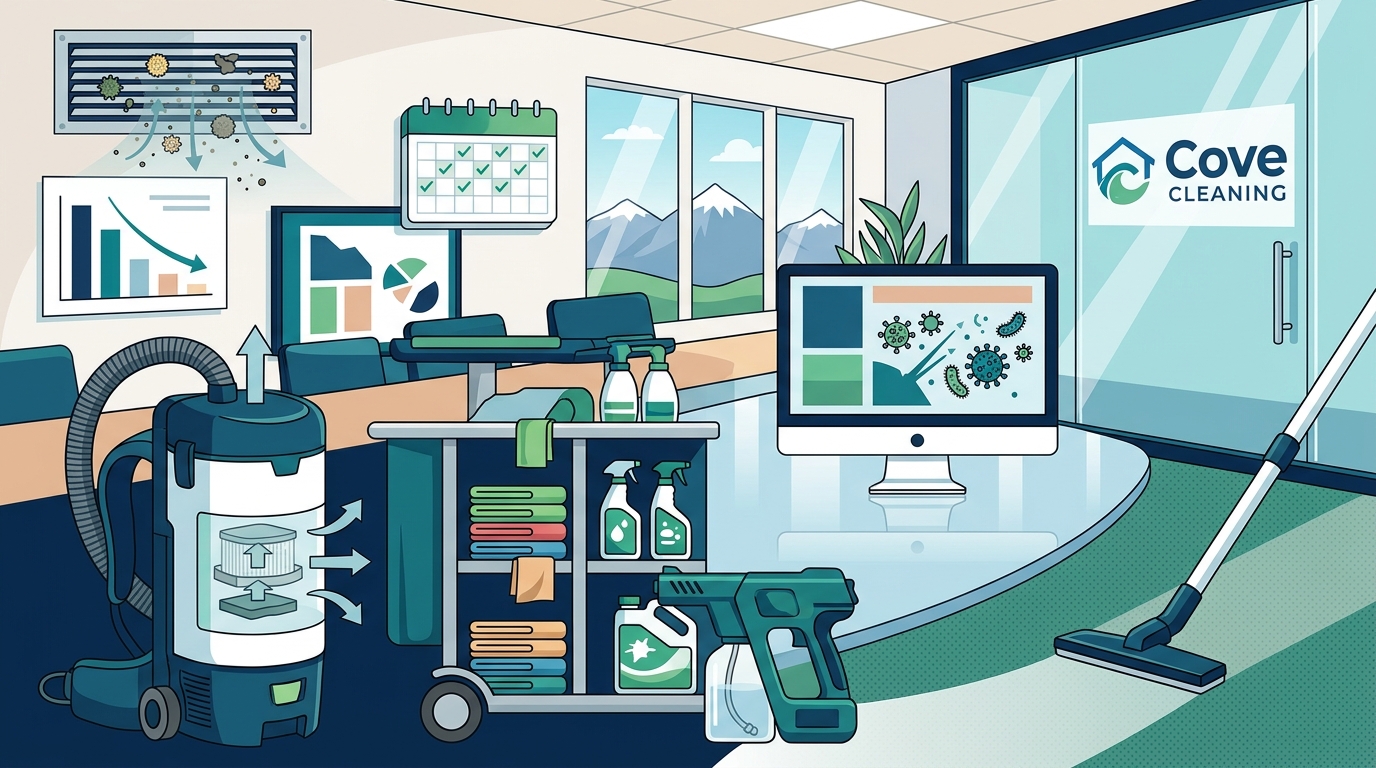
Local service providers understand regional building codes and municipal waste disposal requirements. Companies operating across Davis County and surrounding municipalities maintain established logistics networks for rapid response. You should verify that your chosen provider carries comprehensive liability insurance and workers compensation coverage. Local expertise also translates to faster dispatch times during emergency spill situations or seasonal allergen surges. Regional knowledge ensures that cleaning protocols align with local water conservation guidelines. You can review service area maps to confirm coverage before finalizing any agreement. Trusted providers will offer transparent pricing structures without hidden surcharges for remote locations.
Comparing Cleaning Service Models
Selecting the right service model requires evaluating your facility size, foot traffic, and specific compliance requirements. The following table outlines the primary commercial cleaning options available to Utah businesses.
| Service Model | Frequency | Primary Focus | Best For |
|---|---|---|---|
| Standard Maintenance | Daily or Bi-Weekly | Surface disinfection and waste removal | General office environments |
| Deep Sanitization | Quarterly or Bi-Annually | Carpet extraction and HVAC vent cleaning | High-traffic corporate campuses |
| Specialized Protocols | On-Demand | Post-construction debris and biohazard cleanup | Renovated retail spaces |
| Window & Facade | Monthly or Seasonal | Exterior glass and storefront maintenance | Multi-story commercial buildings |
Key Takeaways
- Commercial spaces experience a forty percent higher concentration of airborne pathogens compared to residential environments.
- Utah businesses benefit from local providers who understand regional dust, pollen, and seasonal allergen cycles.
- Flexible scheduling options ensure cleaning occurs during off-hours without disrupting daily operations.
- Eco-friendly formulations eliminate ninety-nine point nine percent of pathogens while protecting employee respiratory health.
- Comprehensive liability insurance and workers compensation coverage are mandatory for all commercial service contracts.
- Color-coded microfiber systems prevent cross-contamination between restrooms, kitchens, and workstations.
- Transparent pricing structures eliminate hidden surcharges for remote locations or emergency dispatch requests.
Frequently Asked Questions
How often should commercial offices receive professional cleaning services?
Most Utah businesses require daily or bi-weekly service depending on employee count and foot traffic. High-traffic lobbies and shared workstations benefit from daily surface disinfection. Breakrooms and restrooms require more frequent attention to maintain sanitary standards.
Can cleaning services operate during standard business hours?
Yes, many providers offer daytime service for facilities that cannot accommodate off-hours scheduling. You must coordinate access protocols and secure equipment storage before the team arrives. Daytime services typically focus on surface wiping and waste removal rather than deep carpet extraction.
What certifications should a commercial cleaning provider possess?
Reputable companies maintain current liability insurance, workers compensation coverage, and OSHA compliance training. You should request proof of bonding and verify that all staff undergo background checks. Certifications from the Institute of Inspection, Cleaning and Restoration Certification further validate operational standards.
How do Utah seasonal changes impact office cleaning schedules?
Spring pollen and summer dust require adjusted filtration routines and more frequent surface wiping. You should increase visit frequency during peak allergy seasons to maintain indoor air quality. Providers will adjust chemical concentrations and vacuum filters to match local environmental conditions.
What happens if a cleaning team misses a scheduled appointment?
Reliable providers guarantee schedule adherence and offer immediate rescheduling options for missed visits. You should review contract terms regarding service credits and penalty clauses before signing. Transparent communication channels ensure facility managers receive advance notice of any logistical delays.
Are eco-friendly cleaning products as effective as traditional chemicals?
Modern green formulations eliminate ninety-nine point nine percent of common pathogens without releasing harsh volatile compounds. You should request product safety data sheets to verify compliance with occupational health regulations. Eco-friendly options also reduce long-term respiratory irritation for employees with allergies.
How can I request a custom cleaning proposal for my facility?
You can submit a detailed facility layout, square footage, and specific compliance requirements through our online portal. Our team will conduct a complimentary site assessment to determine optimal service frequency. You will receive a transparent pricing breakdown within forty-eight hours of submission.
Secure Your Office Health Today
Partnering with a trusted local provider ensures consistent workplace hygiene and regulatory compliance. You can request a complimentary site assessment and customized service proposal by visiting our main portal. Our experienced team will evaluate your facility layout, foot traffic patterns, and specific compliance requirements. You will receive a transparent pricing breakdown and flexible scheduling options tailored to your operational needs. Contact us today to schedule your consultation and protect your workforce from preventable contaminants.