
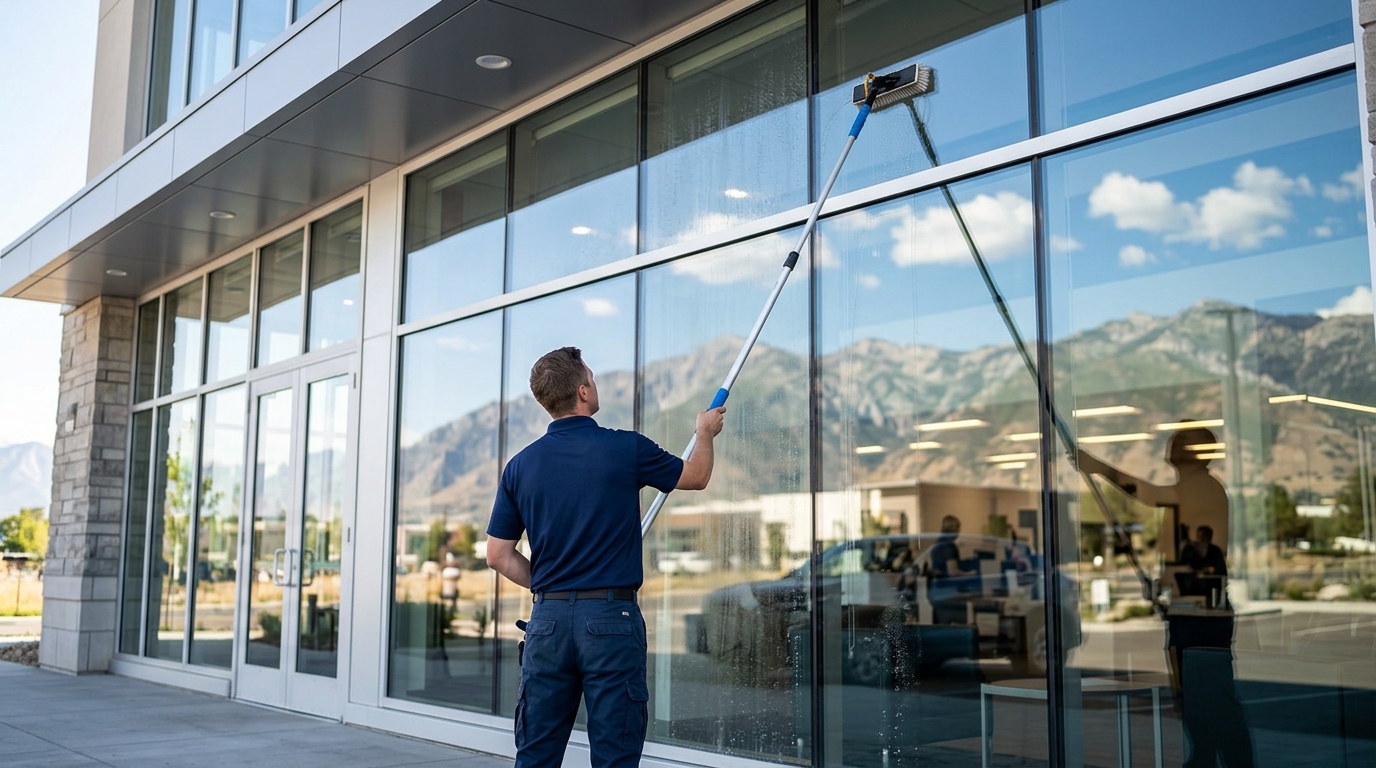
Keeping your commercial windows spotless in Utah is more than a cosmetic choice. Hard water mineral deposits, seasonal dust storms, winter inversion particulates, and intense UV exposure all conspire to cloud your glass faster than in most other states. Clean windows boost curb appeal, let in more natural light, and send a clear message of professionalism to every customer who walks through your door. In this guide, we walk through the most effective commercial window cleaning methods tailored specifically for businesses along the Wasatch Front, from Salt Lake County to Davis County and beyond.
Why Clean Windows Matter for Utah Businesses
First impressions start at the storefront. According to industry data, 80% of customers report that clean surroundings matter more to them than marketing gimmicks. Dirty windows can block up to 50% of natural light, reducing employee productivity and making interior spaces feel dull.
Commercial window cleaning is a specialized service that uses professional techniques and equipment to ensure thorough and safe results. Whether you run a retail store in Bountiful or an office building in Layton, consistent window maintenance protects your brand image and your glass investment. Explore Cove Cleaning's full range of services to see how professional help fits into your maintenance plan.
Utah-Specific Challenges for Commercial Glass
Hard Water and Mineral Deposits
Hard water is water with a high concentration of dissolved minerals, primarily calcium and magnesium. Utah has some of the hardest water in the nation, with mineral concentrations regularly exceeding 250 parts per million in many cities. Every time sprinkler overspray, rain, or tap water touches your commercial glass, it leaves behind mineral deposits that bond to the surface and resist standard cleaners.

Winter Inversions and Dust
Winter temperature inversions trap fine particulates, vehicle exhaust, and industrial emissions near ground level across the Salt Lake Valley. These particles settle on exterior glass as a gray-brown film that rain alone will not remove. In Davis County, alkaline dust from the Great Salt Lake lakebed adds another layer of challenge for businesses in cities like Bountiful and Layton.
UV Exposure
Utah's high elevation means intense ultraviolet exposure year-round. UV accelerates mineral buildup on glass and can degrade window seals over time, making regular cleaning not just an aesthetic task but a protective one.
The Traditional Squeegee Method
A squeegee is a flat, rubber-bladed tool used to wipe liquid from a smooth surface. This is the most widely used technique for commercial window cleaning and remains the gold standard for interior glass, lobby partitions, and detail-heavy storefronts.
Here is a step-by-step approach:
- Dust window frames and sills with a dry cloth to remove loose debris.
- Dilute a commercial-grade window cleaning solution in a bucket using a two-to-one water-to-cleaner ratio.
- Apply the solution with a scrubber or sponge, working from top to bottom.
- Use the squeegee in straight, overlapping strokes from left to right, wiping the blade after each pass.
- Finish edges and corners with a dry microfiber cloth to eliminate residual moisture.
Avoid cleaning windows in direct sunlight. The heat dries the solution too quickly and causes streaks. Schedule window work when the glass is on the shaded side of the building for the best results.
Pure Water Fed-Pole Cleaning
A water-fed pole system is a telescopic pole that delivers purified water through a brush head, allowing technicians to clean exterior windows from the ground. Pure water, sometimes called deionized water, removes dirt without additional chemicals and dries without leaving limescale or hard water spots.
This method is ideal for Utah businesses because it directly combats the mineral-spotting problem. It also reduces the need for ladders and scaffolding, improving safety for multi-story commercial buildings. Professional crews often combine pure water systems with hand detailing for the best results on complex facades.
| Method | Best For | Utah Advantage | Limitations |
|---|---|---|---|
| Traditional Squeegee | Interior glass, storefronts, lobbies | Precise detail work on hard water residue | Requires ladder access for upper floors |
| Pure Water Fed-Pole | Exterior glass, multi-story buildings | No mineral spotting; chemical-free | Less effective on heavy interior grime |
| Steam Cleaning | Interior glass, mirrors, sensitive surfaces | Kills bacteria without chemicals | Not suited for large exterior facades |
| Professional Hard Water Treatment | Mineral-etched glass | Addresses Utah's extreme mineral buildup | Requires specialized solvents and expertise |
Tackling Hard Water Stains
Standard cleaning will not remove established mineral deposits on commercial glass. A professional hard water treatment typically follows three stages: a pH-balanced calcium dissolver breaks the mineral bond, a non-abrasive scrub pad agitates the loosened deposits, and a deionized water rinse ensures zero residue remains.
For severe cases where calcium has fused with the glass surface, a cerium oxide polishing compound can restore clarity without replacing the window. Prevention is far less expensive than remediation. Redirect any sprinkler heads away from glass and schedule professional cleaning on a regular cycle to stop deposits before they reach the etching stage.
If your business is in Davis County or Kaysville, hard water awareness is especially important given the region's mineral-rich water supply.
Scheduling and Frequency Tips
Consistency matters more than any single deep clean. Commercial windows should be cleaned at least twice a year, but high-traffic storefronts and entryway glass may need monthly or biweekly attention. In Utah, the two most critical cleaning windows are spring, to remove winter inversion residue and snowmelt mineral buildup, and early fall, before the next inversion season begins.
Buildings near busy roads or construction zones should consider quarterly service at minimum. A pre-service walkthrough with your cleaning provider helps confirm access points, restricted areas, water sources, and scheduling constraints so there are no surprises on cleaning day. Contact Cove Cleaning to discuss a maintenance schedule that fits your business.
Key Takeaways
- Utah's hard water, winter inversions, and high UV exposure create unique challenges for commercial glass that require specialized cleaning approaches.
- The traditional squeegee method remains the best option for interior glass and detailed storefront work.
- Pure water fed-pole systems eliminate mineral spotting on exterior glass and reduce the need for ladders.
- Hard water stains require professional-grade treatments; household cleaners like vinegar can permanently etch commercial glass.
- Schedule commercial window cleaning at least twice per year, with spring and fall being the most important seasons in Utah.
- Always clean windows on the shaded side of the building to prevent streaking from rapid evaporation.
- Prevention through sprinkler redirection and regular maintenance costs a fraction of remediation or glass replacement.
Frequently Asked Questions
How often should a Utah business clean its windows?
Most commercial buildings should have windows cleaned at least twice a year. Storefronts and entryway glass in high-traffic areas may need monthly or biweekly service, especially during spring when snowmelt and sprinkler startup expose glass to heavy mineral contact.
What is the best method for cleaning commercial windows without streaks?
Use a professional squeegee with overlapping strokes from top to bottom, and always clean when the glass is in shade. Pair this with a commercial-grade cleaning solution diluted properly, and finish edges with a dry microfiber cloth.
Can hard water permanently damage commercial windows in Utah?
Yes. If mineral deposits are left untreated for more than 12 to 18 months, they can chemically etch into the glass surface, causing permanent cloudiness. Early professional treatment is far less expensive than window replacement.
Is pure water cleaning better than traditional methods?
Pure water fed-pole cleaning excels on routine exterior glass because it dries spot-free without chemicals. However, interior glass, lobby partitions, and detail-heavy storefronts still benefit from traditional squeegee techniques. The best crews combine both methods.
Why should I avoid cleaning windows in direct sunlight?
Direct sunlight causes cleaning solution to evaporate too quickly, leaving behind streaks and residue. Schedule window cleaning when the glass is on the shaded side of the building for streak-free results.
What cleaning products should I avoid on commercial glass?
Avoid household acids like vinegar, CLR, or muriatic acid on commercial window glass. These products can etch the glass surface permanently and damage window seals and frames. Use commercial-grade, pH-balanced solutions designed specifically for glass.
Does Cove Cleaning offer commercial window cleaning in Utah?
Cove Cleaning provides professional cleaning services across Davis County, Salt Lake County, Utah County, and surrounding areas. Visit the services page or reach out directly to discuss your commercial cleaning needs.
Get Professional Help Today
Your business deserves windows that shine as brightly as your brand. Whether you need routine maintenance or a deep hard water treatment, the team at Cove Cleaning has the experience and eco-friendly products to deliver exceptional results across Utah. Request a free quote today and let us build a cleaning schedule that keeps your commercial glass spotless year-round.