
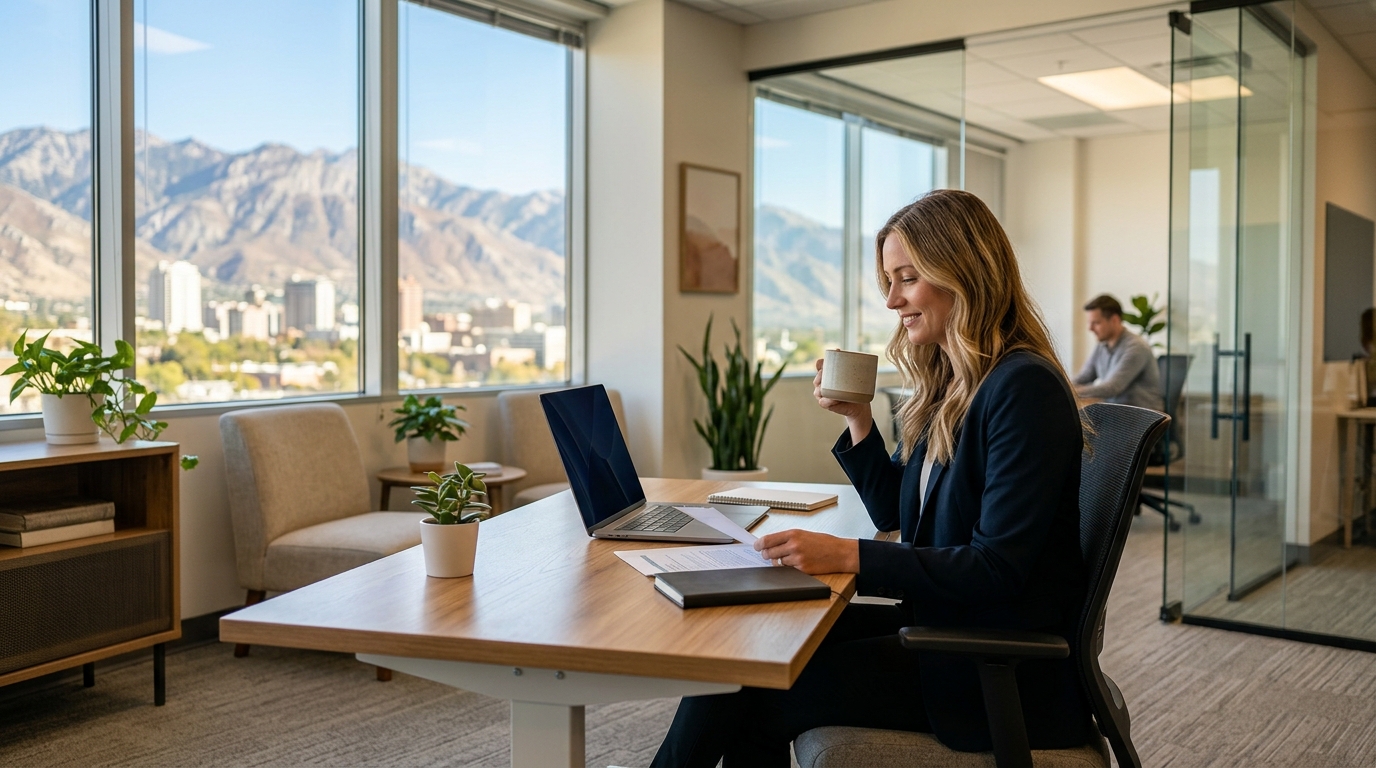
Utah's unique climate creates real challenges for office cleanliness. Winter inversions trap particulate matter along the Wasatch Front, wildfire smoke season pushes outdoor pollutants indoors, and the state's notoriously dry air circulates dust faster than in humid regions. A deliberate commercial cleaning strategy is one of the most direct ways to protect employee health and sustain workplace productivity.
Why Utah Offices Face Elevated Indoor Air Quality Risks
Before choosing a cleaning partner, it helps to understand the specific threats Utah offices contend with.
Winter Inversions and PM2.5
Temperature inversions are a defining feature of the Salt Lake Valley and surrounding basins every winter. During these events, cold air becomes trapped beneath a layer of warm air, concentrating fine particulate matter (PM2.5) at ground level. That polluted outdoor air migrates indoors through HVAC intakes, open doors, and building envelope leaks. Without proper filtration and surface cleaning, those particles settle on desks, carpets, and upholstery—where employees inhale them all day.
Wildfire Smoke Infiltration
Utah is increasingly affected by wildfire smoke. Smoke particles can penetrate commercial buildings and degrade indoor air quality for days or even weeks at a time. A proactive cleaning schedule helps remove settled smoke residue from surfaces and soft furnishings before it re-enters the breathing zone.
Low Humidity and Dust Accumulation
Utah's arid climate means indoor humidity often drops well below the 30–50 percent range recommended for comfort and health. Low humidity accelerates dust circulation and can irritate respiratory passages. Commercial cleaning protocols that include damp-wiping and microfiber dusting are far more effective in these conditions than dry methods that simply redistribute particles.
Step 1: Audit Your Current Cleaning Gaps
Start by walking through your facility with a critical eye. Note the following:
- High-touch surfaces — door handles, elevator buttons, shared kitchen appliances, copier panels, and restroom fixtures.
- Soft surfaces — carpets, upholstered chairs, and fabric partitions that trap allergens and particulates.
- Ventilation components — air vents, return grilles, and visible ductwork that may be coated in dust.
- Break rooms and kitchens — sinks, refrigerators, and countertops where moisture encourages bacterial growth.
Document the frequency each area is currently cleaned and identify where gaps exist between daily, weekly, and seasonal tasks.
Step 2: Choose a Commercial Cleaning Provider With Health-Focused Protocols
Not every janitorial company approaches cleaning from a health perspective. When evaluating providers for your Utah office, prioritize these capabilities:
HEPA-Grade Vacuum Systems
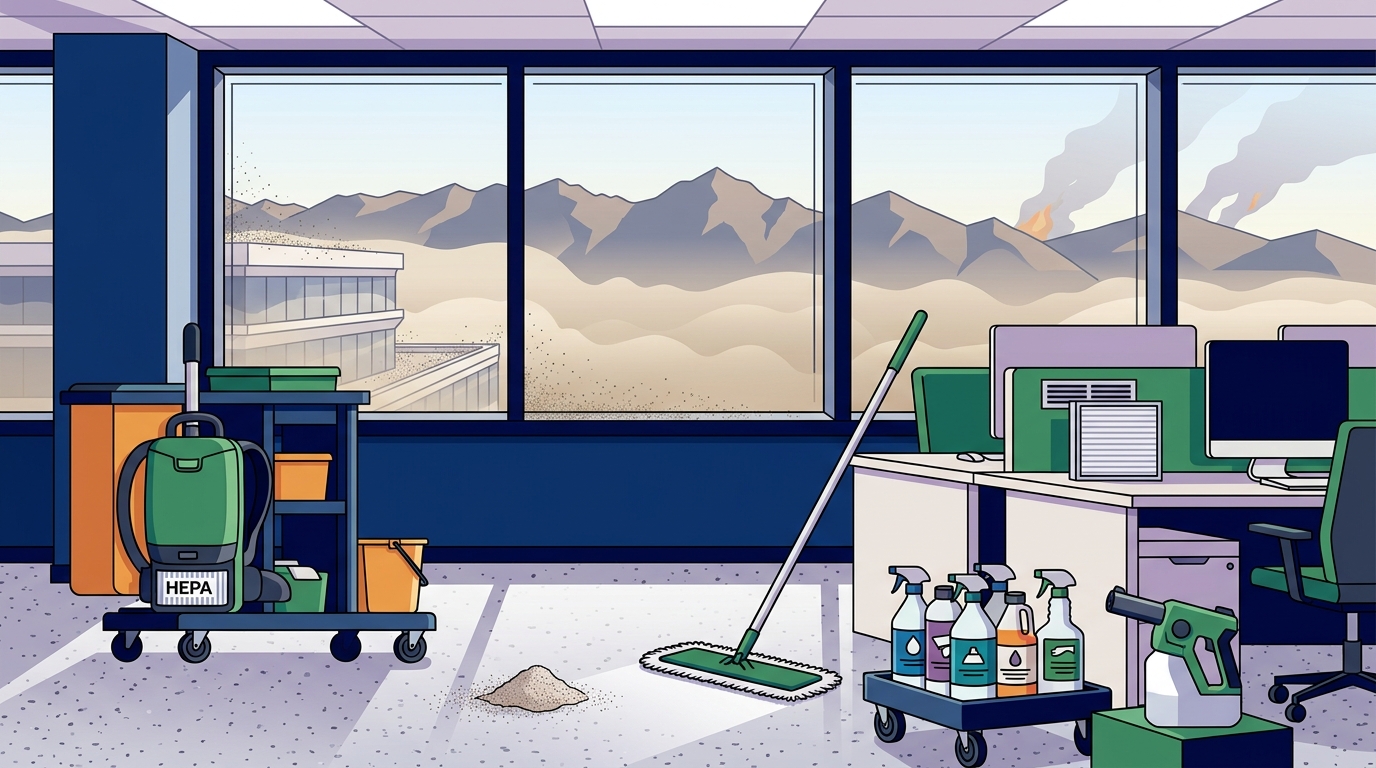
Standard vacuums recirculate fine particles back into the air. Commercial-grade vacuums equipped with HEPA filtration capture up to 99 percent of airborne contaminants, which is especially critical in Utah's dust-heavy environment.
EPA-Registered Disinfectants
Ask whether the provider uses EPA-registered disinfectants on high-touch surfaces. These products have documented kill claims against specific pathogens, unlike general-purpose cleaners.
Green and Low-VOC Products
Utah's Division of Air Quality actively monitors volatile organic compound levels across the state. Using low-VOC cleaning products inside your office means you are not adding to the chemical burden your employees breathe.
Customizable Cleaning Plans
Every facility is different. A reputable commercial cleaning company will offer customizable plans that account for your office size, foot traffic patterns, industry-specific needs, and budget—rather than a rigid one-size-fits-all package.
Step 3: Set a Cleaning Cadence That Matches Utah's Seasons
A static cleaning schedule does not account for the fact that Utah's air quality and allergen loads shift dramatically by season.
| Season | Primary Concern | Recommended Action |
|---|---|---|
| Winter (Nov–Feb) | PM2.5 inversions, cold & flu season | Increase disinfection of high-touch surfaces to daily; schedule monthly carpet deep-cleaning; replace HVAC filters every 30 days |
| Spring (Mar–May) | Pollen, dust storms | Add entrance mat cleaning to weekly rotation; damp-wipe all horizontal surfaces daily |
| Summer (Jun–Aug) | Wildfire smoke, ozone | Deep-clean upholstery and fabric partitions monthly; verify HVAC filter ratings are MERV 11 or higher |
| Fall (Sep–Oct) | Transition allergens, pre-inversion prep | Schedule annual air duct cleaning; deep-clean carpets before inversion season begins |
Step 4: Prioritize High-Impact Tasks
Some cleaning tasks deliver outsized health returns. Make sure these are non-negotiable items in your contract:
- Daily disinfection of high-touch surfaces. Door handles, light switches, shared equipment, and elevator buttons should be wiped with EPA-registered disinfectants every business day.
- Restroom sanitation twice daily. Restrooms are the highest-risk area for pathogen transmission. Twice-daily cleaning with hospital-grade disinfectants drastically reduces bacterial and viral loads.
- Weekly carpet vacuuming with HEPA equipment. Carpets act as massive particle reservoirs. Weekly HEPA vacuuming removes settled dust and allergens before they are kicked back into the air by foot traffic.
- Monthly deep-cleaning rotation. Rotate through carpet shampooing, upholstery extraction, and tile-and-grout scrubbing so that every soft and hard surface receives thorough attention at least quarterly.
- Seasonal air duct and vent cleaning. Air ducts accumulate dust, mold spores, and debris over time. Annual or biannual duct cleaning prevents your HVAC system from distributing contaminants.
Step 5: Integrate Employee-Side Hygiene Practices
Commercial cleaning handles the macro environment, but individual habits matter too. Complement your cleaning program with:
- Hand-sanitizer stations at every entrance, elevator lobby, and break room.
- Desk wipe dispensers so employees can quickly clean their own keyboards, phones, and mice between professional cleaning visits.
- Clear-desk policies that reduce surface clutter, making it easier for cleaning crews to wipe down every workspace thoroughly.
- Indoor plants suited to dry climates (pothos, snake plant, ZZ plant) that add moisture and can help filter certain airborne compounds.
Step 6: Verify Results and Hold Your Provider Accountable
A cleaning contract is only as good as its execution. Build accountability into the relationship:
- Walk-through inspections — Schedule monthly walk-throughs with your cleaning account manager to review performance against the scope of work.
- ATP testing — Adenosine triphosphate (ATP) meters give instant, objective readings of surface cleanliness. Use them periodically on high-touch surfaces to verify disinfection effectiveness.
- Employee feedback surveys — A brief quarterly survey asking staff to rate restroom cleanliness, air freshness, and workspace tidiness reveals issues before they become complaints.
- Photo documentation — Ask cleaning crews to photograph completed tasks. This creates a record and reinforces attention to detail.
Key Takeaways
- Utah's winter inversions, wildfire smoke, and arid climate make indoor air quality a year-round concern for offices.
- Audit your facility for cleaning gaps before selecting a commercial cleaning provider.
- Insist on HEPA-grade vacuums, EPA-registered disinfectants, and low-VOC products.
- Adjust your cleaning cadence seasonally—what works in July does not work in January.
- Combine professional cleaning with employee-side hygiene practices for maximum impact.
- Use ATP testing, walk-throughs, and surveys to verify results objectively.
Frequently Asked Questions
How often should a Utah office be professionally cleaned?
Most Utah offices benefit from daily janitorial service for high-touch surfaces and restrooms, weekly deep-vacuuming, and monthly or quarterly deep-cleaning for carpets, upholstery, and air vents. During inversion season (typically November through February), increasing the frequency of disinfection and filter changes is advisable.
What cleaning products are safest for indoor air quality?
Look for products that are EPA-registered, carry a Green Seal or Safer Choice label, and have low or zero volatile organic compound (VOC) content. These products effectively kill pathogens without contributing to indoor chemical pollution.
Can commercial cleaning really reduce employee sick days?
Yes. Regular disinfection of high-touch surfaces reduces pathogen loads, and HEPA vacuuming removes allergens that trigger respiratory symptoms. Together, these practices create a healthier environment that supports fewer illness-related absences.
Does Utah have specific indoor air quality regulations for offices?
Utah enforces the Utah Indoor Clean Air Act, which prohibits smoking and vaping inside enclosed public-access buildings and within 25 feet of building entrances. Beyond that, offices must comply with OSHA general duty standards. While there is no state-specific IAQ regulation for commercial offices, maintaining clean indoor air is a best practice supported by the Utah Division of Air Quality and organizations like UCAIR.
How do I know if my commercial cleaning company is doing a good job?
Use objective tools like ATP surface-testing meters to verify disinfection, conduct regular walk-through inspections with your provider, and gather employee feedback through short surveys. Consistent, measurable results are the hallmark of a reliable cleaning partner.