
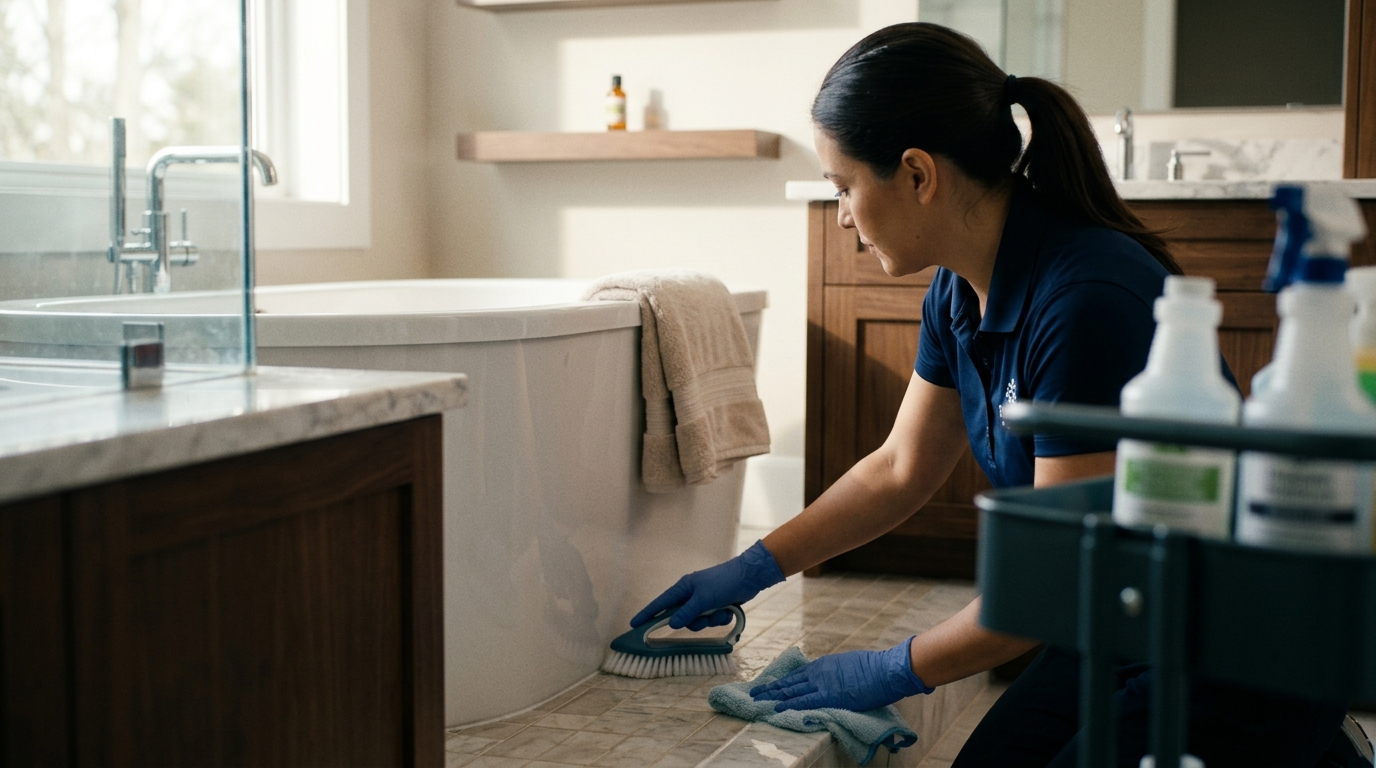
If you have ever wondered exactly what you are paying for when you book a professional deep cleaning, you are not alone. Deep cleaning goes far beyond a quick wipe-down — it is a systematic, top-to-bottom process that reaches the hidden grime regular tidying leaves behind. This guide walks you through every room and task so you know precisely what to expect.
What Exactly Is a Deep Cleaning?
A deep cleaning is a thorough scrub-down that targets dirt and buildup in areas standard cleaning overlooks. Unlike a regular maintenance visit that focuses on visible surfaces, a deep clean addresses spaces behind appliances, inside cabinets, grout lines, air vents, and other hard-to-reach spots.
Professional cleaning companies typically recommend a deep clean as the first service for new clients, establishing a baseline of cleanliness that regular visits can then maintain. After the initial deep clean, most experts suggest scheduling another every six to twelve months, or quarterly if you have pets, allergies, or a busy household.
Deep Cleaning vs. Regular Cleaning: Key Differences
Understanding the distinction helps you choose the right service at the right time.
| Factor | Regular Cleaning | Deep Cleaning |
|---|---|---|
| Scope | Surface-level maintenance — dusting, vacuuming, wiping countertops | Intensive, reaching neglected and hard-to-access areas throughout the home |
| Frequency | Weekly or bi-weekly | Every 3–12 months, or for special occasions |
| Duration | 1–3 hours | 4–8+ hours depending on home size |
| Cost | Lower per visit | Higher due to additional labor, time, and supplies |
Regular cleaning keeps your space livable on a day-to-day basis, while deep cleaning restores it closer to a like-new condition. Both serve distinct and complementary purposes in a well-maintained home.
Room-by-Room Breakdown of a Deep Cleaning Service
Kitchen
The kitchen usually receives the most intensive attention during a deep clean because it is a hotbed for grease and bacteria buildup. Expect professionals to:
- Degrease and sanitize countertops, backsplashes, and range hoods
- Clean inside the oven, microwave, and refrigerator — tasks not covered in a regular cleaning
- Wipe down cabinet fronts, handles, and interior shelves
- Scrub the sink and polish fixtures, including descaling faucets
- Clean behind and beneath appliances such as the stove and refrigerator
- Sanitize garbage cans and recycling bins
- Wipe light switches, outlet covers, and door handles
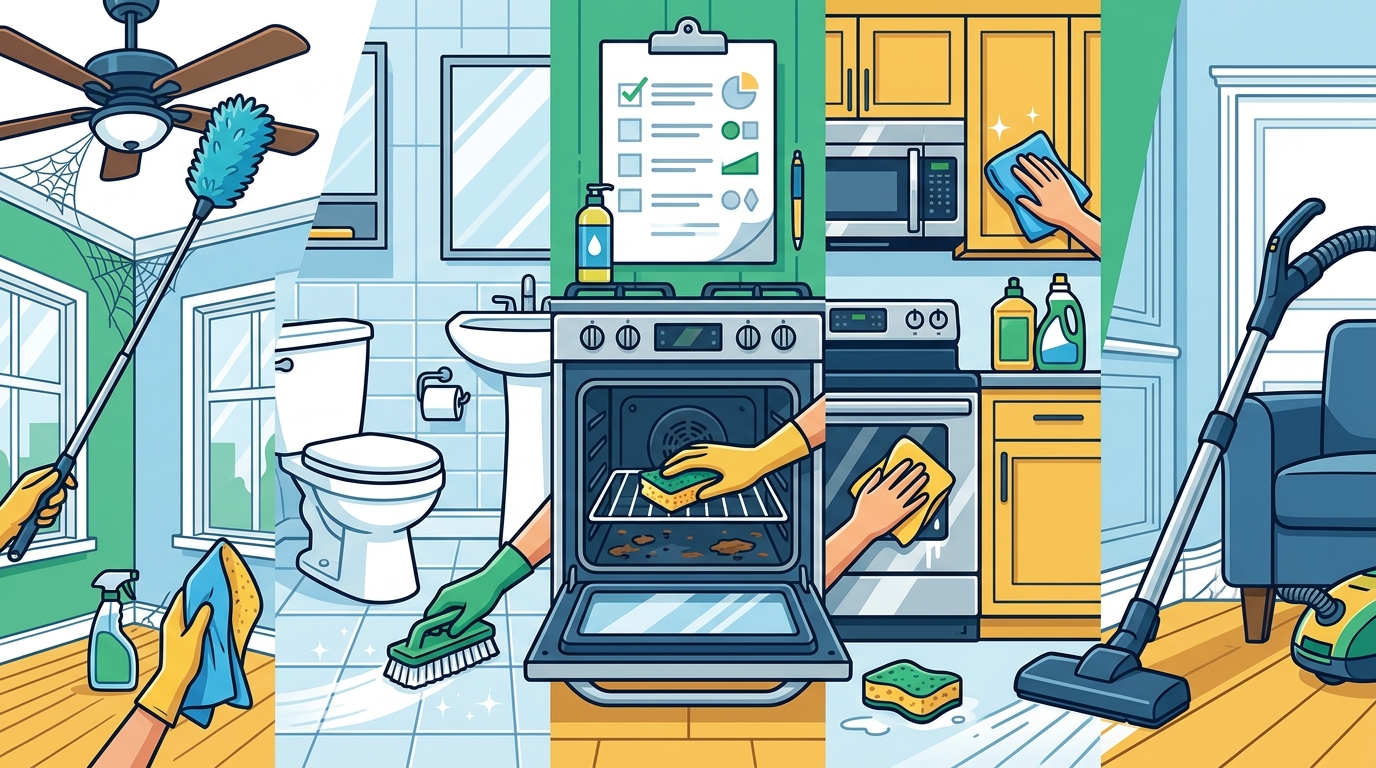
Bathrooms
Bathrooms typically receive more attention than any other room in a deep clean. Tasks include:
- Scrubbing and disinfecting the toilet — around the base, under the seat, and around hinges
- Deep-scrubbing the bathtub, shower walls, shower doors, and shower heads
- Cleaning tile grout with specialized solutions
- Wiping down cabinets, towel racks, and toilet-paper holders
- Cleaning the bathroom exhaust fan
- Removing hard-water deposits and soap scum from fixtures
- Washing mirrors and polishing chrome
Bedrooms
Dust accumulates quickly in bedrooms, especially on soft furnishings. A deep clean typically covers:
- Dusting and wiping all furniture — dressers, nightstands, headboards, bed frames
- Vacuuming mattresses to reduce dust mites and allergens
- Changing bed linens and making beds with fresh sheets (if provided)
- Vacuuming carpets, including along edges and under furniture
- Sweeping and mopping hard floors
- Dusting ceiling fans, light fixtures, and lamp shades
- Wiping baseboards, windowsills, and door frames
Living and Common Areas
Living rooms, hallways, and dining areas benefit from detailed attention to surfaces and soft furnishings:
- Dusting all surfaces including shelves, picture frames, electronics, and decorative items
- Vacuuming upholstered furniture and curtains to remove allergens
- Cleaning under and behind furniture
- Dusting crown molding, baseboards, and floor molding
- Wiping light switches, door handles, and air vents
- Thorough vacuuming and mopping of all floor types
- Removing cobwebs from corners and ceilings
Laundry Room
Often overlooked, the laundry room gets attention during a deep clean too:
- Wiping the exterior and top surfaces of the washer and dryer
- Cleaning baseboards and removing cobwebs
- Sweeping and mopping the floor
- Dusting shelving units and supply storage areas
Common Add-On Services
Many cleaning companies offer optional extras you can bundle with your deep clean for an additional fee. Popular add-ons include:
- Carpet and upholstery cleaning — steam or hot-water extraction to remove deep-seated dirt and allergens
- Interior window washing — panes, tracks, and screens
- Tile and grout restoration — specialty scrubbing and sealing
- Inside-appliance detailing — deep cleaning of ovens, refrigerators, and dishwashers beyond the standard scope
- Porch and patio cleaning — sweeping, power-washing, and furniture wipe-down
- Garage or basement cleaning — sweeping, organizing, and cobweb removal
Always confirm exactly which tasks are included in your quoted price. Packages vary between companies, so asking for a written checklist before the cleaning day prevents surprises.
Health Benefits of Deep Cleaning
Deep cleaning is not just cosmetic — it has measurable health advantages:
- Improved indoor air quality: Removing dust, pet dander, and mold spores from hidden areas reduces airborne pollutants and can ease allergy and asthma symptoms.
- Mold prevention: Mold and mildew thrive in hard-to-reach nooks and damp corners that standard cleaning misses. A deep clean targets those spots directly.
- Germ reduction: Sanitizing high-touch surfaces like light switches, doorknobs, and remote controls limits the spread of bacteria and viruses.
- Stress relief: Research consistently links clean, organized environments to better mood and lower stress levels.
When Should You Book a Deep Cleaning?
There are several scenarios where a deep cleaning makes the most sense:
- Moving in or out: A deep clean before you unpack — or after you move out — ensures a fresh start and can help you reclaim a rental deposit.
- Seasonal transitions: Spring and fall are the most popular times for a deep clean, coinciding with natural decluttering impulses.
- Before or after hosting: Preparing for a holiday gathering or resetting your home after one is an ideal time.
- Starting a recurring cleaning service: Most cleaning companies require or recommend a deep clean as the first visit so regular maintenance sessions can keep your home at that higher standard.
- Post-renovation: Construction dust is pervasive and requires thorough removal from every surface and vent.
- Health concerns: If household members suffer from allergies or respiratory issues, periodic deep cleaning can significantly reduce triggers.
How Much Does a Deep Cleaning Cost?
Pricing varies based on location, home size, and condition, but general benchmarks are helpful for budgeting. A 2,000-square-foot home typically falls in the $200 to $400 range for a one-time deep clean. Add-ons like window washing, oven scrubbing, or carpet cleaning can raise the total. Other factors that influence pricing include the number of bathrooms, whether you have pets, and whether you request eco-friendly cleaning products.
Most professionals will conduct a walkthrough or virtual assessment before quoting a price, which allows them to tailor the plan to your home's specific needs.
How to Prepare Your Home for a Deep Cleaning
A little preparation helps your cleaning team work more efficiently:
- Declutter surfaces — clear countertops, tables, and floors of personal items so cleaners can access every surface.
- Communicate priorities — let the team know if specific areas (e.g., a greasy stovetop hood, a mildew-prone shower) need extra attention.
- Secure valuables and pets — put away jewelry or fragile items, and arrange for pets to be in a safe space during the cleaning.
- Provide access — ensure the team can reach all rooms, closets, and cabinets you want cleaned.
Key Takeaways
- A deep cleaning covers every room top-to-bottom, reaching areas — behind appliances, inside ovens and fridges, grout lines, baseboards, and vents — that regular cleaning skips.
- The kitchen and bathrooms receive the most intensive treatment due to grease, bacteria, and moisture buildup.
- Deep cleaning is recommended every 3–12 months, depending on household size, pets, and lifestyle.
- Expect to pay more than a regular cleaning; a typical session for a mid-size home ranges from $200 to $400 before add-ons.
- Health benefits include improved air quality, mold prevention, and reduced allergens.
- Always request a detailed checklist from your cleaning company so you know exactly what is — and isn't — included in the price.
Frequently Asked Questions
- How long does a professional deep cleaning take?
- On average, expect about 30 to 45 minutes per room. A full-home deep clean can take anywhere from four to eight hours depending on the size and condition of your home.
- Is deep cleaning worth the extra cost?
- For most homeowners, yes. Deep cleaning leaves your home spotless, keeps appliances well-maintained, and creates a germ- and allergen-reduced environment that a regular cleaning alone cannot achieve.
- What is typically NOT included in a deep cleaning?
- Services like exterior window washing, carpet steam-cleaning, unclogging drains, fire or water damage restoration, and heavy furniture moving are usually offered as separate add-ons rather than standard deep-cleaning tasks.
- How often should I schedule a deep cleaning?
- Most experts recommend every three to six months for active households, or semi-annually to annually for smaller, low-traffic homes. Starting a recurring cleaning service with an initial deep clean is a common best practice.
- Can I request eco-friendly products for my deep cleaning?
- Yes. Many professional cleaning companies offer green or eco-friendly product options, though they may carry a small surcharge. Ask when booking to confirm availability.