

How to Prepare Your Home Before the Cleaning Crew Arrives
Hiring a professional cleaning service is one of the smartest ways to reclaim your free time — but a little preparation on your part can dramatically improve the results. Industry experts estimate that spending just 15 minutes prepping your home can save cleaners 30 to 45 minutes of tidying, which translates directly into deeper, more thorough cleaning for every dollar you spend.
This room-by-room action plan walks you through exactly what to do — and what not to do — so you and your cleaning crew are set up for success from the moment they walk in.
Why Preparation Matters More Than You Think
There is an important distinction between tidying and cleaning. Cleaning companies focus on sanitation — scrubbing, disinfecting, vacuuming, and polishing. Tidying (picking up clothes, sorting mail, loading the dishwasher) is typically your responsibility. As Vera Peterson, president of Molly Maid, explains: items like clothes, toys, and dishes get in the way and prevent cleaning professionals from doing their best job.
When your crew arrives to a tidy space, every minute of their visit goes toward the deep cleaning tasks that are hard to do yourself — think baseboards, grout lines, behind appliances, and ceiling fan blades. That means you get significantly more value from every session.
The Night-Before Quick Sweep (10–15 Minutes)
The evening before your scheduled cleaning is the ideal time to handle lightweight prep. Think of it as setting the stage rather than doing the work.
- Run a quick dishwasher cycle. Most cleaners will not wash dishes. An empty sink lets them scrub and disinfect the basin thoroughly.
- Gather stray laundry. Toss dirty clothes into hampers and move hampers into closets. If your crew changes bed linens, strip the beds and leave fresh sheets folded at the foot of each bed.
- Bag up trash and recycling. Empty every wastebasket and take bags to exterior bins. This simple step lets the crew sanitize the bins themselves.
- Do a toy and shoe roundup. Use baskets or bins to temporarily collect items from floors and high-traffic areas.
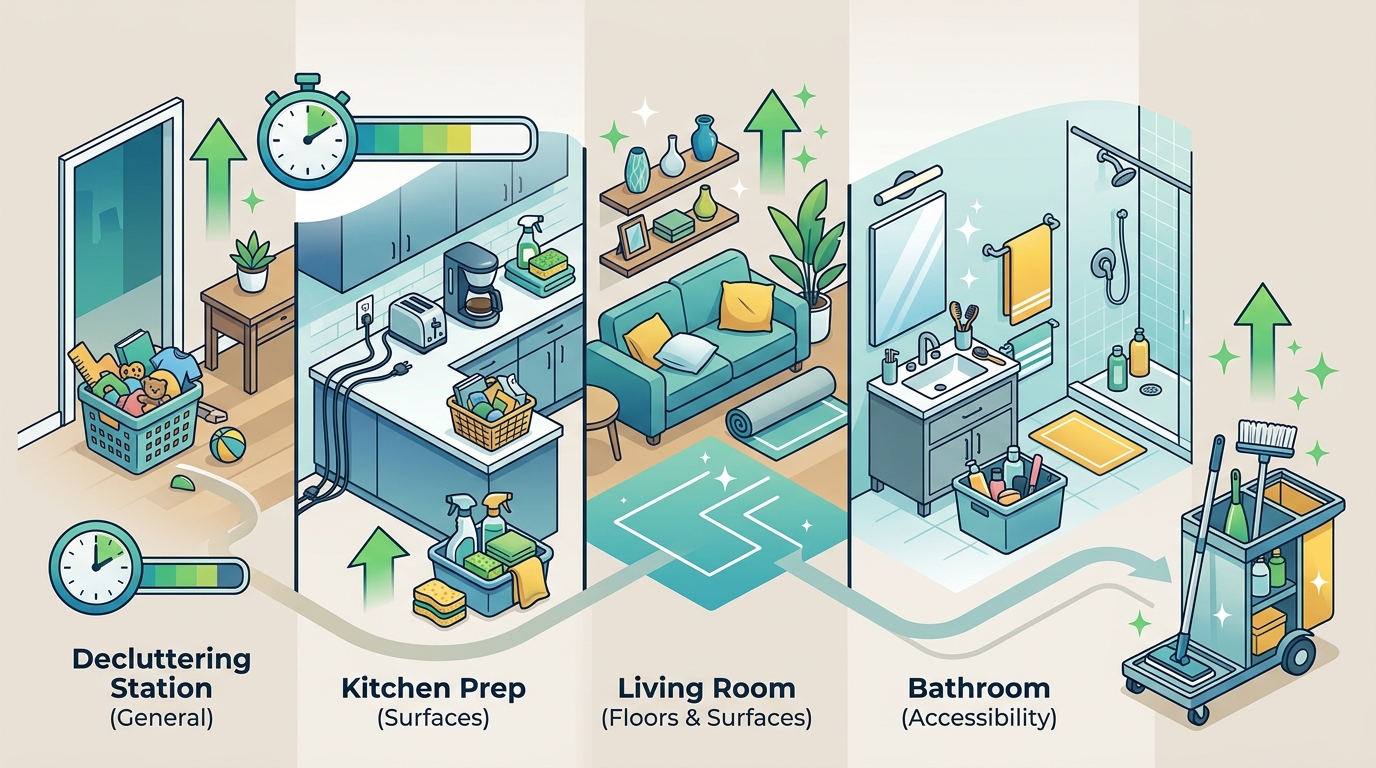
Room-by-Room Preparation Guide
Kitchen
- Clear countertops of small appliances, fruit bowls, coffee mugs, and mail.
- Load or empty the dishwasher so the sink area is fully accessible.
- Wipe up any sticky spills or food residue — cleaners focus on sanitising surfaces, not scraping dried pasta sauce.
- Move pet food bowls to a temporary spot so the crew can mop the full floor.
Bathrooms
- Remove personal care products — toothbrushes, razors, prescription medications, contact lens cases — from counters and shower ledges. This protects your items from contamination or accidental damage.
- Hang up damp towels or move them to the laundry hamper.
- Clear the floor of bath mats, scales, and magazine racks so the crew can scrub tile and grout without obstacles.
Bedrooms
- Make or strip beds depending on your arrangement with the cleaning team.
- Clear nightstands and dressers of jewellery, watches, and loose change.
- Pick clothing off the floor and chair-drobe — your crew should not have to guess what is dirty laundry versus a designer jacket.
Living and Family Rooms
- Gather remote controls, game controllers, magazines, and throw blankets into a single basket.
- Move lightweight furniture (ottoman, floor lamp) away from walls if you want baseboards and carpet edges cleaned.
- If you have a fireplace, make sure ashes are cold and the hearth area is clear.
Home Office
- Collect loose papers, confidential documents, and USB drives into a drawer. Cleaners should never have to handle sensitive paperwork.
- Power down or cover sensitive electronics if dust cleaning is planned nearby.
- Push your desk chair in and clear the floor around your desk.
Secure Valuables and Fragile Items
Accidents happen even with the most careful professionals. Before the crew arrives, do a walkthrough and relocate breakable or high-value items to a safe spot — a locked drawer, a closet shelf, or a protective box. Items to prioritize include:
- Heirloom vases, framed photos on narrow shelves, and collectible figurines
- Cash, credit cards, and jewellery left on countertops
- Fragile electronics like tablets propped on kitchen stands
If something valuable cannot be moved — an antique grandfather clock, for example — point it out to the team lead so they can exercise extra caution around it.
Handle Pets Before the Doorbell Rings
A new person in the home can make pets excited or anxious, which creates distractions and safety risks for everyone. Dogs may bolt through an open door as cleaners carry equipment in and out. Cats can hide in freshly vacuumed rooms or knock over cleaning supplies.
Practical options:
- Crate or confine pets to one room that will be cleaned last.
- Arrange a walk, dog park visit, or doggy daycare for the duration of the appointment.
- At minimum, inform the crew about indoor cats so doors are kept closed.
Guarantee Easy Access
It is unproductive for your cleaning crew to arrive and be unable to enter. Confirm the following before cleaning day:
- Entry method: Leave a spare key in a lockbox, share a garage code, or ensure someone is home to open the door.
- Alarm systems: Disarm security systems or provide the code. With smart-home systems you can reset settings remotely via an app after the crew leaves.
- Parking: Cleaners often carry heavy equipment. Reserve a spot close to your front door, especially if you live on a busy street or in a complex with limited visitor parking.
- Utilities: Verify that water is running in every bathroom and that at least one power outlet per room is accessible — the crew needs both for their equipment.
Communicate Priorities and Special Requests
Your cleaning team follows a standard plan unless you tell them otherwise. A short conversation — or even a handwritten note left on the counter — can redirect their effort where it matters most to you.
Things worth mentioning:
- High-priority zones (e.g., guest bathroom before a weekend visitor)
- Stubborn problem spots like hard-water stains or soap scum buildup
- Delicate surfaces such as marble counters or hardwood that require specific products
- Product preferences or allergies — if you need eco-friendly or fragrance-free solutions, discuss this in advance
- Areas to skip (a home office during a video-call day, a nursery during nap time)
Creating a shared checklist — even a simple note on your phone that you text to the team lead — keeps everyone aligned visit after visit.
What You Should Not Do Before Cleaners Arrive
- Do not deep-clean. You are paying professionals to handle scrubbing and sanitising. Focus only on tidying and decluttering.
- Do not use strong chemical cleaners on surfaces. The crew may apply a different product that reacts poorly, potentially damaging the surface.
- Do not stress about perfection. A little everyday mess is completely expected. The goal is to clear a path, not to make the home spotless before the professionals even start.
Recurring Visits: Building a Prep Routine
If you book regular service — bi-weekly or monthly — preparation becomes almost automatic. Consistent scheduling lets you build micro-habits: tidy toys every Wednesday night, clear bathroom counters every other Monday morning, run the dishwasher the evening before cleaning day. Over a few cycles, what once felt like a chore becomes a five-minute reflex.
Pro tip: keep a small "cleaning-day basket" in each main room. Family members can toss stray items in throughout the day before, and you simply stash the baskets in a closet before the crew arrives.
Key Takeaways
- Fifteen minutes of prep can save your cleaning crew up to 45 minutes — giving you deeper results for the same cost.
- Focus on tidying (picking up, decluttering surfaces, doing dishes) rather than actual cleaning.
- Secure valuables, fragile items, and confidential documents before every visit.
- Confine or relocate pets to keep them safe and reduce distractions.
- Confirm entry access, parking, alarm codes, and working utilities the day before.
- Communicate priorities, problem areas, and product preferences — a short note or text goes a long way.
- Never apply chemical cleaners to surfaces right before the crew arrives.
Frequently Asked Questions
Should I clean my house before the cleaning crew comes?
No. You should tidy — pick up clutter, do dishes, and put away personal items — but leave the actual scrubbing, vacuuming, and disinfecting to the professionals. That is what you are paying them for.
What should I do with my pets during a cleaning appointment?
Keep pets in a separate room, crate them, or take them out of the house entirely. This prevents them from getting in the way, reduces stress for both the animal and the crew, and eliminates the risk of a pet escaping through an open door.
Do I need to provide cleaning supplies?
Most professional services arrive fully equipped with their own supplies and equipment. If you prefer specific products — eco-friendly options or particular floor cleaners — discuss this with the company when you book so they can accommodate your request.
How far in advance should I prepare?
The night before is ideal for tasks like running the dishwasher, doing laundry, and gathering clutter. A five-minute walkthrough the morning of is enough for last-minute checks like securing pets and confirming entry access.
Do I need to be home while the cleaning crew works?
It depends on your comfort level and the company's policy. Many clients provide a key or lockbox code so the cleaners can work while the homeowner is out, which minimises disruptions to your day.
How often should I schedule professional cleaning?
Frequency depends on household size, pets, and lifestyle. A common cadence is bi-weekly maintenance cleaning with a deeper session every three to six months for tasks like interior window washing and appliance deep-cleaning.