

Are Residential Cleaning Services Fully Bonded and Insured?
When you invite a cleaning crew into your home, you’re trusting strangers with your most personal space—and your most valuable belongings. One of the smartest questions you can ask before signing a service agreement is: “Are you fully bonded and insured?” This guide breaks down exactly what those terms mean, why they matter, and how to verify them before your first appointment.
Bonded vs. Insured: They Are Not the Same Thing
Many homeowners use the phrases interchangeably, but bonding and insurance serve different purposes and protect different parties.
What Does “Insured” Mean?
When a cleaning company says it is insured, it typically carries one or more commercial insurance policies that protect the business and its clients from common operational risks. General liability insurance is usually the first policy a cleaning business purchases. It covers third-party property damage and bodily injuries—for example, if a cleaner accidentally knocks over an heirloom vase or a client slips on a freshly mopped floor.
Additional policies a reputable residential cleaning company may carry include:
- Workers’ compensation insurance—required in most states for businesses with employees, covering medical expenses and lost wages if a cleaner is injured on the job.
- Commercial auto insurance—needed when the company uses business vehicles to travel between homes.
- Hired and non-owned auto insurance—important when employees drive personal vehicles for work, since personal auto policies typically exclude work-related accidents.
- Inland marine (tools & equipment) insurance—protects cleaning equipment while in transit or at a job site.
- Commercial umbrella insurance—boosts the limits on underlying liability policies for greater protection.
What Does “Bonded” Mean?
A bonded cleaning company has purchased a surety bond—most commonly called a janitorial service bond or fidelity bond. Unlike insurance, a bond involves three parties: the cleaning company, the surety (bond provider), and the customer. If an employee commits theft during a cleaning visit, the client files a claim with the surety, which compensates the client up to the bond limit. The cleaning company is then responsible for reimbursing the surety.
In other words, insurance primarily protects the business, while bonding primarily protects the client. Both working together create a comprehensive safety net.
Are Cleaning Companies Legally Required to Be Bonded and Insured?
There is no single federal law mandating that residential cleaning businesses carry general liability insurance or surety bonds. However, requirements vary significantly at the state and local level:
- Workers’ compensation is required in nearly every state once a cleaning business has employees.
- Business licenses and permits are required in most municipalities; some localities also require specific bonds.
- Surety bonds are generally not mandated by state law for cleaning services, but many clients and property managers require them before signing a contract.
Even when not legally required, operating without insurance and bonding exposes both the business and its clients to significant financial risk.
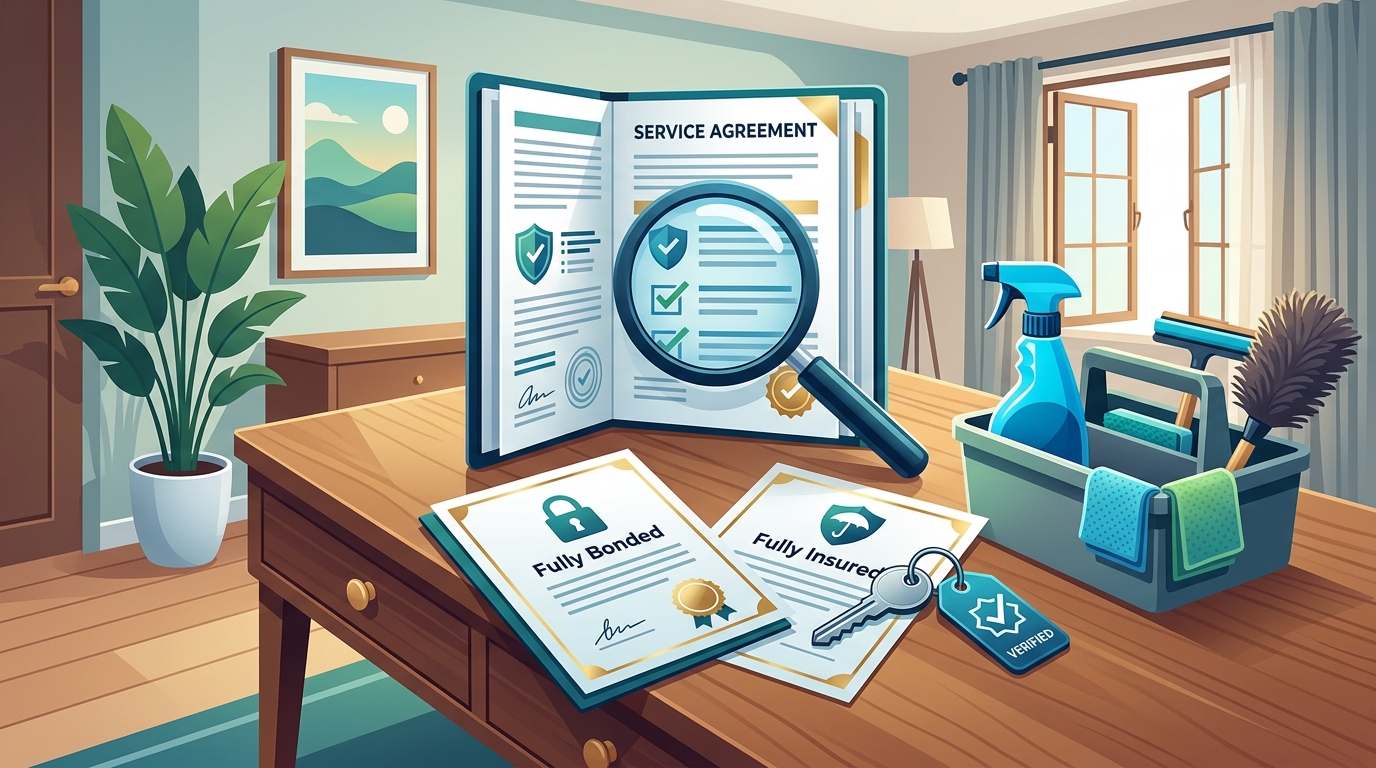
Why Bonding and Insurance Matter to You as a Homeowner
1. Financial Protection Against Theft
Cleaning employees spend significant amounts of unsupervised time in your home. A janitorial bond ensures you can be compensated for losses up to the full bond amount if theft occurs. For residential cleaning, bond amounts typically range from $10,000 to $25,000.
2. Coverage for Accidental Property Damage
General liability insurance means you won’t be stuck paying out of pocket if a cleaner damages flooring, countertops, fixtures, or personal items. The policy covers repair or replacement costs and any associated legal fees.
3. Protection From Liability for Worker Injuries
Without workers’ compensation, a cleaner injured in your home could potentially file a claim against your homeowner’s insurance. A properly insured cleaning company carries its own workers’ comp, keeping liability off your shoulders.
4. A Signal of Professionalism
Companies that invest in full bonding and insurance demonstrate a commitment to high service standards and accountability. This credential is often a deciding factor when homeowners compare cleaning services.
How Much Does Bonding and Insurance Cost a Cleaning Company?
Understanding typical costs helps you gauge whether a company’s pricing is reasonable and whether it can truly afford proper coverage:
| Coverage Type | Typical Annual Cost |
|---|---|
| General Liability Insurance | $350–$800+ |
| Janitorial Surety Bond | $125–$300+ |
| Workers’ Compensation | Varies by state and payroll |
| Commercial Umbrella | ~$800/year |
| Commercial Auto | Varies by fleet size |
These costs are modest relative to the protection they provide. A cleaning company that claims it cannot afford insurance may be cutting corners in other areas as well.
How to Verify a Cleaning Company’s Bonding and Insurance
Never take a company’s word alone. Follow these steps before your first cleaning appointment:
- Request a Certificate of Insurance (COI). Reputable companies can produce this document instantly—many now offer digital COIs on demand.
- Confirm the policy is current. Check effective dates and expiration dates on the certificate. Coverage that lapsed last month does you no good today.
- Call the insurance or bonding provider. Contact the issuing company directly to verify the policies are active and in good standing.
- Check coverage limits. Many client contracts require a minimum of $1 million per occurrence and $2 million aggregate in general liability. Make sure the limits are adequate for your property.
- Ask about workers’ compensation. If the company has employees (not just independent contractors), confirm workers’ comp is in place.
- Read reviews and references. Online reviews and direct references can confirm a company’s track record of reliability and professionalism.
Red Flags: When a Cleaning Service May Not Be Properly Covered
- The company cannot or will not produce a COI.
- Pricing is dramatically lower than competitors—skipping insurance is one way to undercut the market.
- Workers are all classified as independent contractors to avoid carrying workers’ comp and commercial insurance obligations.
- The company is not registered as an LLC or corporation, which suggests limited formal business structure.
- No mention of bonding or insurance appears on the website, marketing materials, or service agreement.
What Cove Cleaning Recommends
At Cove Cleaning, we believe every homeowner deserves full transparency about the protections that stand behind a cleaning service. Before you hire any residential cleaning company, insist on written proof of both bonding and insurance. A trustworthy company will be proud to share its credentials—not evasive about them.
Key Takeaways
- Bonding protects you (the client) against theft and dishonest acts by cleaning employees.
- Insurance protects the business (and, by extension, you) from accidents, property damage, and injury liability.
- There is no blanket federal requirement, but workers’ comp, licenses, and sometimes bonds are required at the state and local level.
- Always request and verify a Certificate of Insurance and bond documentation before the first visit.
- Residential janitorial bonds typically range from $10,000 to $25,000 and cost as little as $125 per year.
- General liability insurance for house cleaning averages around $44–$48 per month.
Frequently Asked Questions
What is the difference between bonded and insured for a cleaning service?
Insurance protects the cleaning business from financial loss due to accidents, property damage, and lawsuits. Bonding (a surety bond) protects the client by guaranteeing compensation if an employee commits theft or fraud. Both serve different purposes and work together to provide comprehensive coverage.
Is a cleaning company required by law to be bonded?
In most states, surety bonds are not legally required for residential cleaning services. However, many clients, property managers, and commercial contracts require bonding before work begins. It is considered an industry best practice.
How can I verify that a cleaning company is truly bonded and insured?
Ask for a Certificate of Insurance (COI) and the bond documentation. Then contact the insurance carrier or surety company directly to confirm the policies are active and current. Check that coverage limits meet your needs.
How much does a janitorial surety bond cost?
Surety bond costs for residential cleaning businesses start at approximately $125 per year. The premium depends on the bond amount, which typically ranges from $10,000 to $25,000 for residential services.
What happens if an uninsured cleaner damages my property?
If the cleaning company has no general liability insurance, you may need to file a claim against your own homeowner’s insurance or pursue the company directly through small claims court. This is why verifying insurance before hiring is so important.
Does “bonded and insured” guarantee quality work?
Not directly. Bonding and insurance protect against financial loss from theft, accidents, and damage—they do not guarantee cleaning quality. However, companies that maintain proper coverage typically demonstrate a higher level of professionalism and accountability.